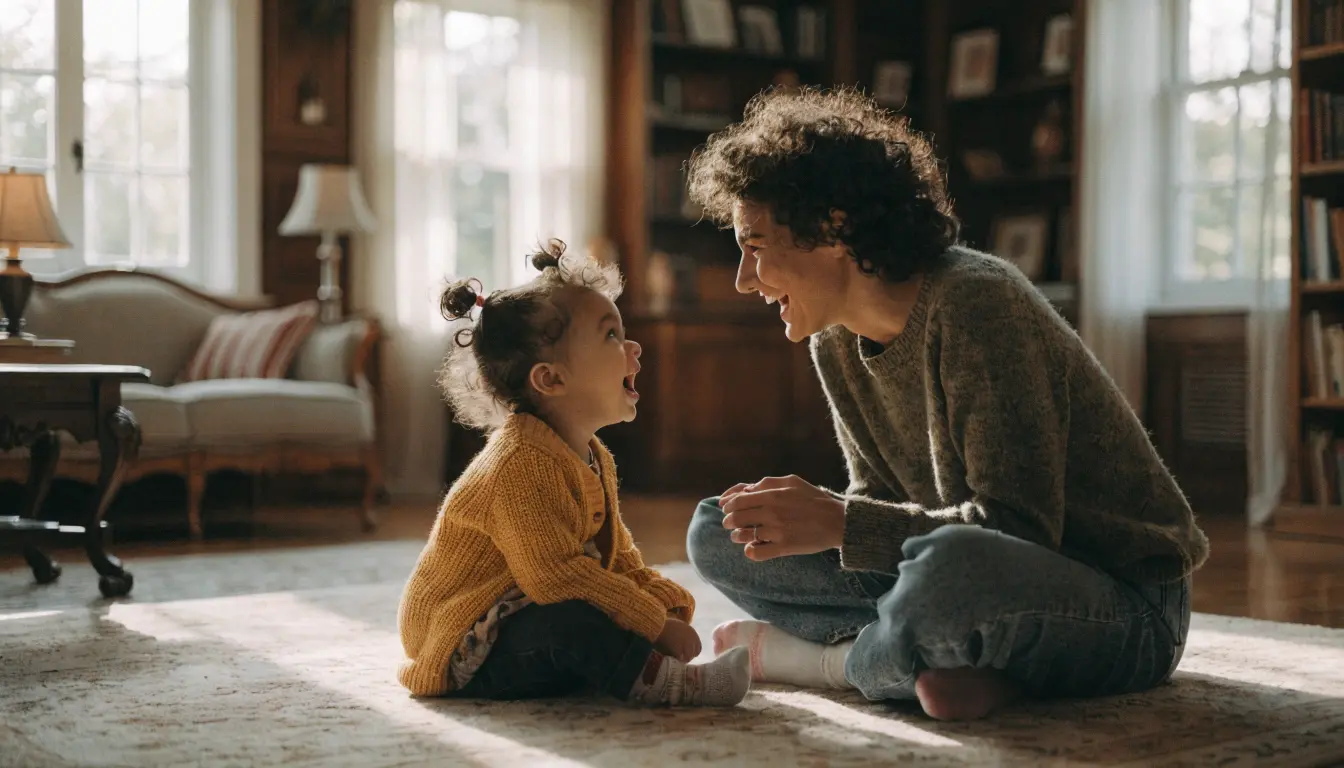
My daughter was about eighteen months old when she looked up at me from the kitchen floor, pointed at the dog, and said — clear as day — “doggie eat.” Two words. That was it. But I burst into tears right there next to the dishwasher, because I suddenly understood: she had been listening to everything. Every word I narrated, every silly song I sang, every time I said “look at the puppy eating his food” while she sat in her high chair — it had all been quietly landing somewhere deep inside her.
That’s the thing about talking to your children that nobody really warns you about. You don’t always see it working. You’re just talking — into what sometimes feels like a void of babbling and blank stares — and then one day it comes back to you, fully formed, in a tiny voice that sounds a lot like yours.
If you’ve ever wondered whether it matters how you talk to your kids, or how much, or what you should even say to a baby who can’t talk back yet — this article is for you. Let’s dig into the beautiful, powerful, science-backed world of talking parents.
What Does “Talking Parents” Actually Mean?
Our E-book


When we talk about “talking parents,” we’re not just referring to parents who are chatty by nature (though that helps!). We’re talking about parents who are intentional communicators — people who understand that the way they speak to, with, and around their children is one of the most impactful parenting tools they have.
Talking parents narrate their day to a newborn. They ask a toddler open-ended questions instead of yes/no ones. They get on eye level with a preschooler having a meltdown and say “I can see you’re really frustrated right now” instead of “stop crying.” They model the kind of communication they want their child to grow into.
It’s less about being the parent who talks the most, and more about being the parent who talks with purpose and presence.
The Science Behind Talking to Your Baby
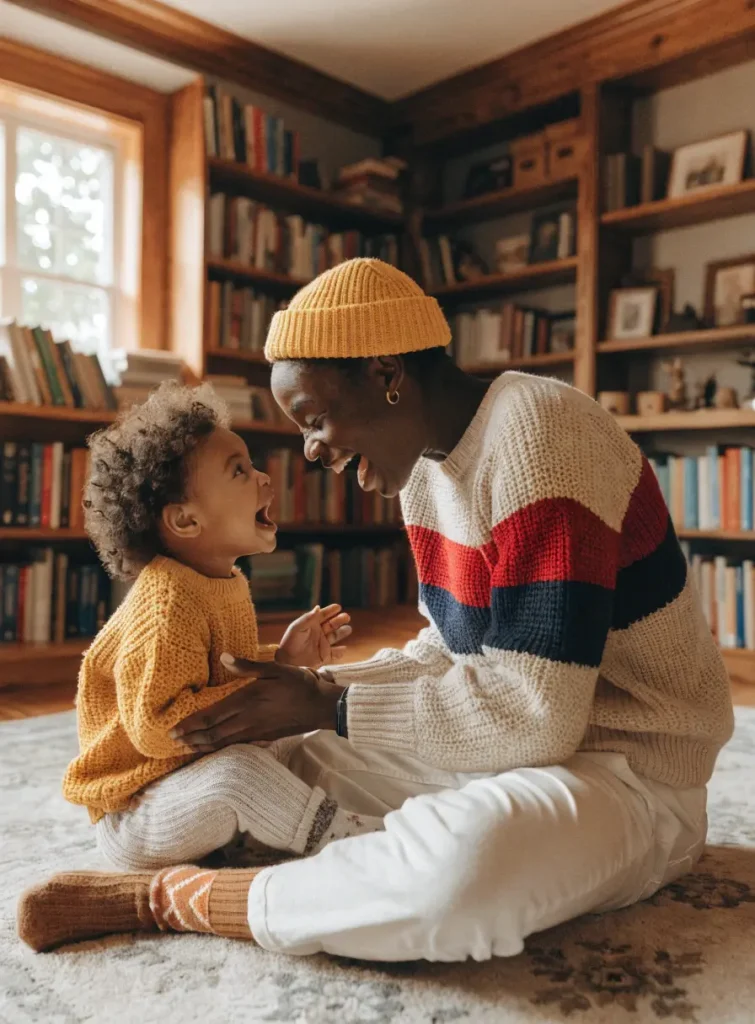
Let’s start at the very beginning, because this is where most parents underestimate their impact.
The 30 Million Word Gap
In the 1990s, researchers Betty Hart and Todd Risley found that by age three, children from more talkative families had heard roughly 30 million more words than children from less communicative homes. This gap — and the language-rich environment that closed it — was directly tied to vocabulary size, reading ability, and academic performance years later.
Now, this research has been nuanced and debated since, but the core takeaway holds: early language exposure matters enormously. Your voice is your baby’s first teacher, and it starts working from the womb.
How Baby Talk (Parentese) Actually Helps
You know that high-pitched, sing-songy voice you instinctively use with babies? That’s called “parentese,” and it’s not just adorable — it’s scientifically useful. The slower pace, exaggerated vowels, and higher pitch help babies isolate sounds and learn the building blocks of language faster.
So go ahead and say “Dooooes the baby want some MILK?” in that ridiculous voice. You’re literally building their brain.
Talking to Newborns: Yes, Even Before They Respond
One of the most common things new parents wonder is: am I supposed to talk to my baby even when they have no idea what I’m saying? The answer is an enthusiastic yes — and here’s how to make it feel natural.
Narrate Your Day
Running commentary is your best friend in the newborn stage. While you’re changing a diaper: “Okay, let’s get this fresh diaper on you. There’s the snap. Now your little legs are free!” While you’re cooking: “We’re making pasta tonight. I’m boiling the water — see the steam?” It sounds a little silly at first, but it becomes second nature quickly.
Name Feelings Early
Emotional vocabulary starts in infancy. When your baby cries and you say, “You’re hungry, aren’t you? I know, I know, that’s an uncomfortable feeling,” you’re planting seeds for emotional literacy that will blossom in toddlerhood and beyond. This isn’t just fluff — naming emotions helps children eventually learn to regulate them.
Read Aloud — A Lot
Books are one of the most powerful talking tools you have. Reading aloud to your baby from day one exposes them to richer vocabulary than everyday conversation alone, introduces narrative structure, and creates a beautiful bonding ritual. It doesn’t even have to be a children’s book — some parents read their own novels aloud. The words and the closeness are what matter most.
Talking With Toddlers: The Art of the Slow-Down
Toddlers are communication volcanoes — erupting constantly, not always coherently, and sometimes at 6 a.m. about a very urgent matter involving the wrong color cup. This stage is where your talking-parent skills get seriously tested.
Ask Open-Ended Questions
Instead of “Did you have fun at the park?” try “What was your favorite part of the park today?” Instead of “Are you hungry?” try “What does your tummy feel like right now?” Open-ended questions build vocabulary, critical thinking, and the habit of self-reflection. They also lead to much more interesting conversations — toddlers, it turns out, have a lot of opinions.
Follow Their Lead
Toddlers learn language best when conversations follow their interests. If your two-year-old is obsessed with trucks, talk about trucks. A lot. Name every type of truck you see. Make up stories about trucks. Read truck books. Their passion is the engine; your words are the fuel.
Slow Down and Wait
One of the hardest things for fast-talking adults is leaving enough silence for a toddler to respond. Their processing time is much longer than ours. Ask a question, then wait — even if it feels awkward. The pause is where language development happens.
Talking Through Big Feelings: Emotional Coaching in Action
Here’s where talking parenting gets really powerful — and really challenging. How you communicate during your child’s emotional moments shapes their entire relationship with feelings for the rest of their life. No pressure, right?
Validate Before You Redirect
When your toddler is on the floor screaming because you cut their sandwich the wrong way, your instinct might be to explain, reason, or dismiss the meltdown. But the most effective approach — backed by decades of developmental research — is to validate first.
“You are SO upset right now. You wanted the sandwich in triangles and I made squares. That felt really wrong to you.” It sounds counterintuitive, but acknowledging the feeling is what actually helps the child move through it. Once they feel heard, they can hear you.
Name It to Tame It
Neuroscientist Dr. Dan Siegel coined the phrase “name it to tame it” — when we label an emotion out loud, it activates the prefrontal cortex and helps calm the emotional brain. In practical terms: saying “you’re feeling scared” actually helps your child feel less scared. It’s one of the most practical tools in the talking parent’s toolkit.
Avoid Shame-Based Language
The words we use in moments of frustration leave marks. Phrases like “you’re being so bad,” “what is wrong with you,” or “big kids don’t cry” might stop a behavior in the short term, but they erode a child’s sense of self over time. Instead, separate the behavior from the child: “That behavior isn’t okay” versus “You are bad.” It’s a subtle shift that makes a profound difference.
Co-Parenting Communication: When Two Parents Need to Talk Too
Talking parents don’t just communicate with their kids — they communicate about their kids, and with each other. Healthy co-parenting communication (whether you’re together, separated, or somewhere in between) directly impacts your child’s emotional security and sense of stability.
Keep Kids Out of Adult Conversations
Children should never be messengers, mediators, or confidants for adult conflicts. Even very young children pick up on tension and distress between the adults they love. Protect their emotional space by keeping difficult adult conversations private and solution-focused.
Present a United Front
Kids are remarkably perceptive about inconsistencies between parents. When possible, align on major parenting decisions — bedtime routines, screen time rules, discipline approaches — before presenting them to your child. Disagreements happen, but resolving them away from little ears protects your child’s sense of security.
Model Healthy Conflict Resolution
Here’s the flip side: it’s actually healthy for children to occasionally witness parents or caregivers having a respectful disagreement and working through it. This teaches them that conflict is normal, manageable, and doesn’t mean relationships fall apart. The key word is respectful — tone, volume, and resolution matter.
Screen Time, Passive Audio, and the Limits of Background Talk
In an age of smart speakers, YouTube Kids, and background TV, it’s worth asking: does all audio count as language exposure? The short answer is no — not equally.
Research consistently shows that live, contingent conversation — where a real person responds to your child’s sounds, expressions, and attempts at communication — is far more developmentally powerful than passive audio from screens or background TV. A show talking at your child is not the same as you talking with your child.
Video calls are a partial exception — because they involve a real person responding in real time, they offer some of the interactional benefits of in-person conversation. But nothing beats the real thing: your face, your voice, your full attention.
Building a Language-Rich Home: Simple Daily Habits
You don’t need a curriculum, flashcards, or a structured program. Language development thrives in the ordinary moments of family life. Here are a few habits that make a real difference:
- Mealtime conversations: Turn off screens during meals and make talking the main event. Ask everyone about their day, their favorite moment, something funny that happened.
- Bedtime storytelling: Beyond reading books, try making up stories together. “Once upon a time there was a little girl named [your child’s name] who found a magical…” Let them fill in the blanks.
- Car ride chats: Some of the best conversations happen in the car. No eye contact, no agenda — just two people talking. Use this time intentionally.
- Sing together: Songs are language learning in disguise. Nursery rhymes, silly made-up songs, old classics — all of it builds phonemic awareness and vocabulary in a joyful way.
- Think out loud: Model your own reasoning process: “Hmm, it looks like rain. I’m thinking we should bring an umbrella — what do you think?” You’re teaching language and critical thinking at the same time.
From Day One: How Early Communication Connects to Everything Else
The habits you build as a talking parent don’t exist in isolation — they connect to every other aspect of your child’s wellbeing and development. The same nurturing, responsive communication style that builds vocabulary also builds secure attachment. The emotional coaching that helps your toddler name their feelings also reduces behavioral challenges down the road. The open-ended questions you ask a preschooler become the critical thinking skills of a teenager.
And it all starts in those earliest days — when you’re still figuring out feeding schedules, sleep routines, and whether you’re doing any of this right. If you’re just getting started on this parenting journey and want a solid foundation to build from, I really recommend reading Everything New Parents Need to Know About Child Care (From Someone Who’s Been There) — it covers the full landscape of newborn and infant care in a way that’s warm, practical, and completely non-judgmental. Think of it as the companion piece to everything we’ve talked about here.
Because talking is just one piece of the picture — and the more equipped you are across the board, the more confident and present you’ll be in all of these moments with your child.
What Kind of Talking Parent Do You Want to Be?
Here’s a question worth sitting with: when your child is grown and thinks back on the sound of your voice, what do you want them to remember?
Do you want them to remember a voice that was calm in the chaos? A voice that said “tell me more” and actually meant it? A voice that named their feelings before dismissing them, that told them stories, that sang off-key in the car and didn’t care?
That’s the voice you’re building right now. Every conversation, every bedtime story, every “I hear you” in the middle of a meltdown is a deposit into something that will last their entire lifetime.
You don’t have to be perfect. You just have to keep showing up, keep talking, keep listening. The words will find their way.
“The most important thing in communication is hearing what isn’t said.”
— Peter Drucker
What’s one phrase or habit that’s changed the way you communicate with your child? Share it in the comments — your insight might be exactly what another parent needs to hear today.
