

I remember the moment it hit me—the real, gut-punch weight of it—like it was yesterday. It was a Tuesday. My daughter was three, and we were having “breakfast for dinner.” Again. She was wearing a fairy costume over her pajamas, and I was eating cold spaghetti straight from the Tupperware container because the mac and cheese I’d made for her had used up the last of my energy.
I looked across the table at this tiny human, ketchup on her cheek, wings slightly askew, and I felt this immense pressure in my chest. It wasn’t just exhaustion (though that was there). It was the overwhelming thought: I am it. I am the entire village.
In that moment, I was convinced I was failing. I wasn’t the “fun dad” or the “organized mom.” I was just the tired person in a fairy-costume-wrangling, cold-spaghetti-eating solo act. I thought I had to be everything to make up for the absence of the other parent. I thought I had to be the disciplinarian and the soft place to land, the breadwinner and the PTA volunteer, the chef and the therapist.
It took me a long time to realize that I wasn’t supposed to be two parents. I was just supposed to be me—a present, resilient, perfectly imperfect parent. If you are reading this and feeling that same Tuesday-night weight on your shoulders, let’s sit down together (you bring the coffee, I’ll bring the leftover spaghetti) and talk about how we do this.
The Myth of “Doing It All”
Our E-book


When we become single parents, we often inherit a ghost. The ghost of the “nuclear family” ideal. Society whispers that we have to overcompensate. We buy into the idea that to be a good single parent, we have to be a superhero.
But here is the truth I’ve learned: Superheroes are fictional. Burnout is real.
For the first year, I tried to be the “fun” parent and the “strict” parent. I’d enforce a rigid schedule, lose my temper when it fell apart, and then try to make up for it by planning elaborate, exhausting weekend outings. I was running a marathon at a sprinting pace, and my kid wasn’t even enjoying the scenery because she was just watching me crash.
The shift happened when I gave myself permission to be human. When I stopped trying to be a perfect mother and started focusing on being a present parent.
If you are interested in learning how to shift your mindset from perfectionism to presence—and how that single shift can build resilience in your child—I created a detailed guide that walks you through the process. It’s called Present Parent, Resilient Child: A Mindful Approach to Raising Compassionate Humans. It includes a 30+ page PDF and a professionally narrated audiobook designed for busy parents who don’t have time to sit down and read a textbook. You can find it here. It’s the playbook I wish I’d had on that Tuesday night.
The Art of the “Two-Minute Rule”
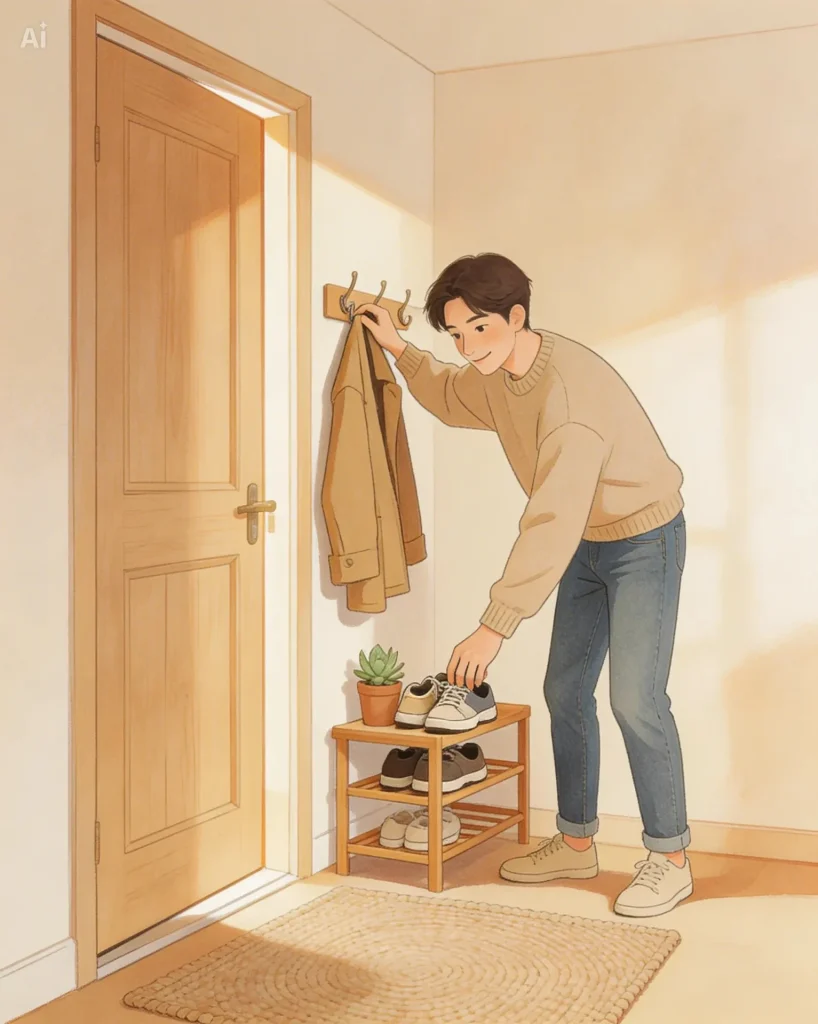
Let’s get practical. When you are the only adult in the house, efficiency isn’t just a nice-to-have; it’s a survival mechanism. But I’m not talking about military-style schedules. I’m talking about small wins.
I live by what I call the Two-Minute Rule. If a task takes less than two minutes, I do it immediately. Hang up the coat? Two minutes. Wipe the toothpaste out of the sink? Two minutes. Send that email to the teacher? Two minutes.
This stops the avalanche. The biggest killer of single parent sanity is the mental load—the thousand tiny tasks piling up in your brain until you feel paralyzed. By tackling the micro-tasks instantly, I free up mental space for the big stuff: quality time, emotional regulation, and sleep.
Try it tomorrow morning. When you see the clutter, don’t think, “I’ll get to that later.” Just do the two-minute thing. It’s a small act of self-care that pays massive dividends in peace of mind.
The Village: It’s Okay to Ask for It
We hear “it takes a village” all the time, but no one tells you how to build one when you’re starting from scratch. I used to feel guilty asking for help. I thought it was admitting I couldn’t handle my own life.
Now, I view asking for help as a gift to my child. When I let my best friend come over and fold laundry while I take a 15-minute shower, I’m not failing; I’m teaching my daughter that community is essential. When I swap babysitting nights with another single mom down the street, we aren’t just saving money; we’re modeling interdependence.
Here is your permission slip: You do not have to be a martyr. Let go of the pride. Build your roster. Who is your “in case of emergency” person? Who is your “bring me soup when I’m sick” person? Who is your “sit in silence while the kids destroy the living room” person?
Your village doesn’t have to be blood relatives. It just has to be your people. Find them. Nurture those relationships. They are as important to your child’s upbringing as any educational toy or extracurricular activity.
Redefining “Quality Time”
There is this pressure that quality time has to be elaborate. Disney World. Camping trips. Pinterest-worthy crafts. But here is the secret: Kids don’t remember the production value; they remember the connection.
Some of the deepest conversations I’ve had with my daughter happened in the car between soccer practice and the grocery store. Some of our best bonding moments have been lying on the living room floor at 7:00 PM on a Friday night, too tired to move, watching The Great British Bake Off and laughing at the soggy bottoms.
I stopped trying to be the cruise director of a luxury liner and started being the captain of a cozy little rowboat.
Actionable Tip: Create a “Connection Jar.” Get a mason jar and some popsicle sticks. On each stick, write a simple, low-cost activity: “Read three books by flashlight,” “Dance party to one song,” “Draw self-portraits of each other,” “Make popcorn and watch a movie in a fort.” When you have a moment of energy, pull a stick. It takes the pressure off you to constantly come up with ideas and ensures the time you do have is intentional.
Navigating the Financial Fog
Let’s talk about the elephant in the room: money. Being a single parent often means being a sole income household, and that financial pressure can bleed into everything. It makes you short-tempered, anxious, and less present.
I had to radically change my relationship with money. I stopped viewing budgeting as a restriction and started viewing it as a tool for freedom.
I have a simple system: three accounts. One for bills (automatic payments), one for savings (untouchable for emergencies), and one for “fun money” for me and the kid. The fun money is guilt-free. If we want to blow it all on ice cream sundaes one Saturday, we do it. If we want to save it for a month to go to the trampoline park, we do that too.
The key is transparency (age-appropriately). I don’t burden my child with adult worries, but I do talk about choices. “We can’t buy the new video game this week because we chose to go to the museum last weekend. Which was more fun?” This teaches financial literacy and resilience without creating anxiety. They learn that money is a tool for making choices, not a source of stress.
The Guilt Monster and How to Tame It
The guilt is the worst part, isn’t it? The guilt that you’re working too much. The guilt that you’re not working enough. The guilt that you lost your temper. The guilt that you’re secretly looking forward to bedtime so you can have silence.
I call this the Guilt Monster. It feeds on your energy.
I used to let the Guilt Monster run the show. I’d overcompensate with toys or let boundaries slide. But I learned that kids don’t need a perfect parent; they need a predictable one. Structure and boundaries actually make them feel more secure than a permissive, guilt-ridden parent who is constantly trying to make up for something.
When I feel the Guilt Monster creeping in now, I use the “Repair” technique. If I yell (because I’m human, and I do yell sometimes), I don’t wallow in guilt. I go to my kid, get on her level, and say, “Hey, I’m sorry I yelled. I was feeling frustrated about work, and I took it out on you. That wasn’t fair. I love you, and I’m going to try to take a deep breath next time.”
That apology is more valuable than any guilt-induced trip to the toy store. It teaches them accountability, emotional regulation, and that love isn’t about perfection—it’s about showing up and doing the work.
Protecting Your Peace
As a single parent, your nervous system is the nervous system of the household. If you are anxious, the house feels anxious. If you are calm, the house has a chance to be calm.
I had to learn to guard my peace like a mama bear guards her cub.
That means:
- Saying no. No to the birthday party when we’re all exhausted. No to the extra committee role. No to the family obligation that feels draining rather than supportive.
- Protecting the mornings. I wake up 20 minutes before my daughter. Not to clean, but to sit with my coffee and just be. It sets the tone for the entire day.
- Lowering the bar. Is the laundry folded? Great. Is it clean? Even better. Is everyone alive, fed, and wearing something that is technically clothing? Gold star.
You might feel selfish for prioritizing your own peace. But think of it like the oxygen mask on an airplane. You have to put yours on first before you can help your child. Your calm is their security blanket.
Nurturing Resilience in Your Child
There is a hidden gift in single parenthood: resilience. Your children are watching you. They see you struggle, get back up, laugh when the toast burns, and figure out how to fix the sink with a YouTube video. They are learning that life isn’t about avoiding problems, but about facing them with courage and humor.
But resilience isn’t just about them surviving; it’s about them thriving with empathy. One of the most beautiful things about a single-parent household is the deep, often profound, bond that forms. Because there are only two of you (or a few of you), you learn to communicate in a way that larger families sometimes miss.
I focus on mindful listening. When my daughter talks, I put the phone down. I make eye contact. I don’t try to fix her problems immediately; I just sit with her in them. This practice of presence is the foundation of raising a compassionate human—one who knows that their feelings matter and who, in turn, will value the feelings of others.
The “Good Enough” Parent
There’s a concept in psychology by D.W. Winnicott called the “good enough mother.” It’s the idea that children don’t need perfect parents; they need parents who try, who fail, and who repair.
You are not a broken version of a two-parent family. You are a whole, complete family structure in your own right.
Your home might look different. Maybe dinner is a picnic on the living room floor. Maybe bedtime is 15 minutes later because you needed that extra snuggle time. Maybe your “village” looks more like a network of fellow solo parents texting memes at 2:00 AM during a sleep regression.
That isn’t a lack. That is a unique architecture of love.
Your Monday Morning Pep Talk
If you are in the trenches right now—the tantrums, the school runs, the late-night fevers, the loneliness, the math homework that makes you want to cry—hear this: You are doing it.
You are the safe place. You are the one who kisses the boo-boos and pays the bills. You are the magic.
You don’t have to be superhuman. You just have to be present. The load you are carrying is heavy, but look at the strength in your arms. You are building a human. You are breaking cycles. You are showing up.
Some days, “showing up” will look like a home-cooked meal and a calm bedtime story. Other days, “showing up” will look like cereal for dinner and falling asleep on the couch together at 7:30 PM. Both are victories.
Give yourself grace for the moments you lose your patience. Celebrate the small wins. And please, please—ask for help when you need it. You were never meant to do this alone, and the fact that you are trying so hard means your child is already richer for it.
Some Motivation
To the single parent reading this: Your child doesn’t need a perfect parent. They need you. They need your laugh, your resilience, your willingness to say sorry, and your unwavering presence. The days are long and the years are short, but the love you are cultivating in this unique space is immense. You are not just surviving; you are building a legacy of strength, compassion, and authenticity. Keep going. The messy, beautiful, chaotic life you are creating is exactly the one your child needs.
So, here is my challenge to you this week. Pick one thing from this article to try. Maybe it’s the Two-Minute Rule. Maybe it’s asking a friend for help without apologizing. Maybe it’s just giving yourself permission to order pizza on a Wednesday.
And if you are ready to go deeper—to move from survival mode to a truly mindful, connected family culture—I’ve put everything I’ve learned into a resource for you. “Present Parent, Resilient Child: A Mindful Approach to Raising Compassionate Humans“ is designed for busy parents like us. It’s a 30+ page PDF ebook paired with a professionally narrated audiobook, so you can listen during your commute or while you’re folding that endless pile of laundry. It’s the gentle guide to becoming the calm, connected parent you’ve always wanted to be. You can check it out right here.
Until then, be kind to yourself. You’ve got this.
“There is no way to be a perfect parent, but a million ways to be a good one.”
